Here's something we see constantly when working with B2B businesses. You're spending serious money on marketing. Google Ads, LinkedIn, maybe some events. The campaigns are running. Leads are coming in. Your marketing team says they're hitting their targets.
But when you look at pipeline, something doesn't add up. The leads aren't turning into opportunities the way the numbers suggest they should.
So you ask your sales director what's going on.
"The leads aren't good enough. We can't work with what marketing's sending us."
You check with your marketing director.
"Sales isn't following up fast enough. Leads go cold before anyone touches them."
Both teams have dashboards backing up their story. Both believe they're right. And you're stuck trying to figure out where the actual breakdown is whilst watching your customer acquisition cost climb every quarter.
The Problem Isn't Sales or Marketing (It's What Happens Between Them)
Here's what we've learned from working inside hundreds of HubSpot portals. The problem usually isn't that you've hired the wrong people. Your sales director is competent. Your marketing director delivers results.
The breakdown happens in the operational layer between them. In something most businesses barely think about until it goes wrong: lead assignment.
So what actually is lead assignment?
Lead assignment is how your CRM decides who owns an enquiry when it comes in. Which rep gets notified. How quickly they're alerted. What they're expected to do next.
When it's working, it's invisible. Leads flow seamlessly from marketing into sales ownership. Everyone knows what they're responsible for. Follow-up happens fast.
When it's broken, leads sit in queues with no owner. Sales reps are either drowning or starving. High-intent prospects go cold waiting for someone to notice them. And nobody can quite put their finger on where things are going wrong.
What Good Lead Assignment Should Do for Your Business
When HubSpot lead assignment works properly, four things happen:
Someone owns every lead straight away. No leads sitting in queues waiting to be claimed. No orphaned contacts that everyone assumes someone else is handling. Clear accountability from the second they enter your system.
Workload gets distributed fairly across your sales team. You don't want three reps drowning whilst two have nothing to do. Balanced distribution means consistent quality across your team and nobody burning out or sitting idle.
Leads go to the right sales rep. If you've got regional teams or product specialists, the right leads land with the right reps. Enterprise deals go to enterprise closers. Regional leads go to people who understand local markets.
Bad data gets caught before it reaches your sales team. Records missing key information get flagged and fixed instead of landing on someone's desk incomplete and unusable.
When these elements fail, pipeline becomes unpredictable, sales productivity tanks, and opportunities disappear into gaps nobody's monitoring.
Research from InsideSales.com shows that leads contacted within five minutes are 21 times more likely to enter your sales process than those contacted after 30 minutes. Every hour your lead assignment process adds in delay cuts your expected conversion rate by a measurable amount.
This isn't just about HubSpot lifecycle stages or lead scoring. It's about the fundamental routing mechanism that makes everything else work.
The Real Cost of Broken Lead Assignment in HubSpot
Let's put some numbers on this.
Research from ZoomInfo shows that sales reps spend 27% of their time dealing with data issues and administrative tasks. That's over 500 hours per year per rep that could be spent selling.
For a 10-person sales team at £60K average salaries, that's roughly £150K in salary costs absorbed by inefficiency. If each rep carries a £500K quota, that lost time represents potential pipeline worth well over £1 million.
But the costs go deeper:
Speed to lead suffers dramatically. When leads sit unassigned in your HubSpot CRM, response times stretch from minutes to hours or days. If poor lead assignment causes 24-hour delays instead of 5-minute response, you're potentially cutting your conversion rate in half.
Accountability disappears between marketing and sales. Without clear ownership, leads get passed around or simply ignored. A lead comes in from LinkedIn. Sits for three days. A rep finally picks it up, makes one call, gets voicemail, and moves on. The lead goes cold. There was no clear owner, no automatic task, no SLA monitoring.
Trust erodes between teams. Marketing thinks they're delivering quality MQLs. Sales thinks they're receiving rubbish. This plays out in your leadership meetings as debates that waste hours on visibility problems, not performance problems.
Sales forecasting becomes guesswork. Your HubSpot CRM says you have 200 open opportunities. But how many are being actively worked? Without proper lead assignment creating clear ownership, your pipeline numbers become part data, part fiction.
How to Fix Lead Assignment in HubSpot
Fixing lead assignment isn't about installing better technology. Most businesses already have the tools they need. The problem is that lead assignment sits at the intersection of three hard problems: getting teams to agree on definitions, building automation that actually works, and maintaining it as your business changes.
Step 1: Define Your HubSpot Lead Assignment Rules
Before you build any HubSpot workflows, get your teams aligned on the assignment rules.
Sit down with sales and marketing and answer these questions:
Who should receive leads from each source? Different channels often require different handling. Bottom-of-funnel leads need immediate sales attention. Early-stage enquiries might need nurturing first.
What criteria determine assignment? Geography? Company size? Industry? Lead score? Be specific. "Enterprise leads go to senior reps" only works when you've defined what enterprise means in your business.
How should workload be balanced? Equal rotation regardless of performance? Weighted distribution based on close rates? Capacity-based considering existing pipeline?
What happens when a lead can't be assigned? Manager review? Holding queue? Back to marketing nurture? You need a plan for exceptions.
Document these rules clearly in a shared document that becomes your source of truth when debugging issues three months from now.
This is the foundation of proper RevOps practice. If you're building out broader revenue operations capabilities, lead assignment is often the first high-impact project to tackle.
Step 2: Build HubSpot Workflows to Automate Lead Assignment
Once your rules are defined, build them into HubSpot workflows using the workflow automation tool.
The core structure of any lead assignment workflow includes:
Enrollment trigger. Define which contacts should enter this assignment process. This could be based on form submissions, lifecycle stage changes, lead score thresholds, or specific property values.
Data quality check. Use if/then branches to verify you have minimum information needed for proper routing. Records missing critical data should be sent to an enrichment workflow before assignment.
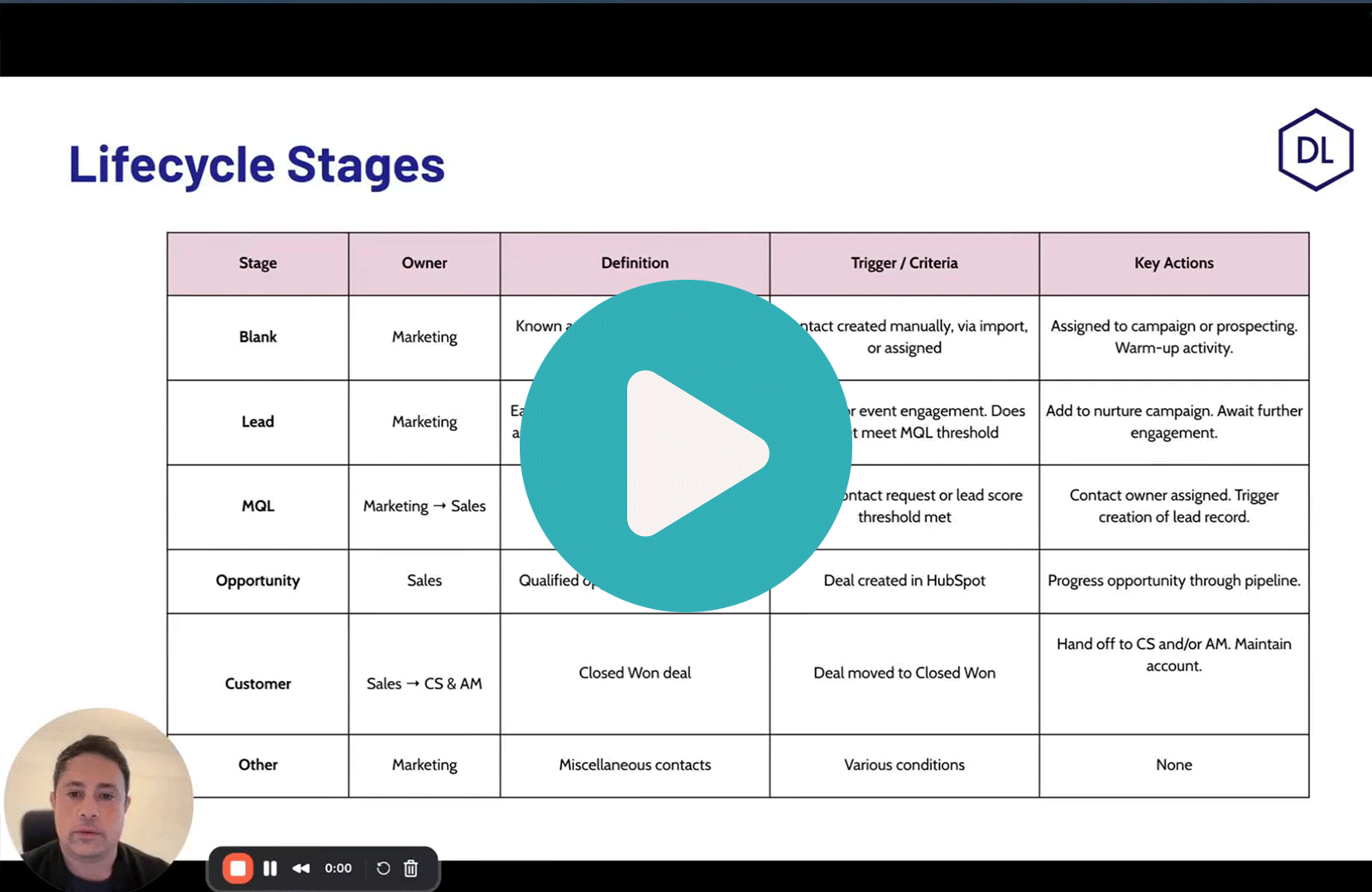
Lifecycle stage update. Move contacts to the appropriate stage for accurate funnel reporting and proper lifecycle stage management.
Assignment logic. Use HubSpot's "rotate record to owner" action to distribute leads evenly across your team. For more complex routing, use if/then branches based on your defined criteria (geography, company size, source, etc.).
Task creation. Automatically create a follow-up task for the assigned owner with a clear deadline and specific instructions about what action they should take.
Notification. Send immediate alerts to the assigned rep via email or Slack so they can respond quickly.
This entire sequence happens automatically in HubSpot the moment a lead meets your criteria. No manual routing. No delays. No gaps.
Step 3: Build Safeguards into Your HubSpot Lead Assignment Process
Even well-designed systems need failsafes:
SLA monitoring with HubSpot workflows. Track how long leads sit before first contact. Flag anything exceeding your threshold. Build reports that show this data to managers daily so bottlenecks get spotted immediately.
Automatic reassignment triggers. If an owner doesn't take action within your timeframe, automatically reassign the lead or escalate to sales management. This ensures leads don't die in inactive queues.
Data quality gates before assignment. Route incomplete records to a data enrichment or cleaning process before they hit sales. A lead without contact information isn't ready for assignment and will just frustrate your team.
Re-engagement paths for unworked leads. Return unworked leads to marketing nurture rather than letting them sit forever in a rep's contact list going cold. This gives them a second chance at conversion.
These safeguards transform lead assignment from a one-time action into a self-correcting system that catches and fixes problems automatically.
The Benefits of Proper HubSpot Lead Assignment
When lead assignment works properly in your HubSpot CRM, sales and marketing stop blaming each other.
Everyone can see who owns what leads. Follow-up times become transparent. You can establish genuine SLAs between teams because there's actual data to hold people accountable.
Leads get worked instead of getting cold. Sales reps know exactly what's theirs and can prioritise accordingly. Sales managers can spot bottlenecks in real-time rather than discovering problems weeks later in pipeline reviews.
Your HubSpot CRM transforms from a data graveyard into an operational system that actually drives revenue team behaviour and results.
Proper lead assignment delivers measurable improvements. Research from Velocify analysing nearly three million leads found that automated distribution methods improve response time and lead conversion by 87% compared to manual distribution (Business Wire)
For a business generating 400 leads monthly with a baseline 5% lead-to-opportunity conversion rate (20 opportunities), improving conversion by even 30% would add 6 additional opportunities monthly.
How to Diagnose Lead Assignment Problems in Your HubSpot Portal
Before you start rebuilding, audit what you have today in HubSpot.
Check for unassigned records. Run a HubSpot report showing contacts created in the last 90 days with no owner. If that number is anything other than zero, you have a gap.
Review manager ownership patterns. Filter your HubSpot contact database by owner and look for managers showing up repeatedly as contact owners. That's often a sign that leads are falling into default buckets rather than being properly assigned to reps.
Measure speed to first action in HubSpot. How long between lead creation and first logged activity in the contact timeline? Research from LeadResponseManagement.org found that contacting a lead within five minutes makes you 100 times more likely to connect than waiting an hour (LeanData). This is particularly critical for high-intent leads like demo requests or pricing enquiries.
Look at conversion variance across your sales team. Compare lead-to-opportunity conversion rates by rep using HubSpot's reporting tools. If your top rep converts at 35% and your bottom rep at 8%, and they're supposedly working the same types of leads, something's wrong with assignment logic.
Talk to your sales reps. Ask them: How do you know when you have a new lead to work? Do you feel like you're getting your fair share? Do the leads match your territory? The answers will tell you whether the system you think exists matches reality.
Take Action This Week on Your HubSpot Lead Assignment
If you've identified problems in your lead assignment process, here's how to move forward.
This week: Bring sales and marketing together for a two-hour workshop. Work through the assignment rule decisions outlined above. Document every answer in a shared document.
Next week: Build your first workflow in HubSpot. Start with your highest-volume lead source. Get it working properly before expanding to other channels.
Within 30 days: Review the data in your HubSpot reports. Are leads being assigned? Are notifications working? Are conversion rates improving? Adjust your rules based on what you learn.
Lead assignment isn't glamorous. It doesn't get discussed in strategy meetings. But it's foundational revenue operations infrastructure that determines whether your entire go-to-market function actually works.
Get Expert Help with HubSpot Lead Assignment
If you're struggling to diagnose or fix lead assignment problems in HubSpot, you're not alone. This is one of the most common RevOps challenges we help B2B companies solve.
At Digital Litmus, we're a HubSpot Platinum Solutions Partner specialising in revenue operations and HubSpot implementation for B2B companies. We help businesses create clear lead management frameworks, implement the automation to support them, and train teams to use them effectively.
The businesses we work with typically see measurable improvement within 60-90 days. Better conversion rates. Faster response times. Less friction between teams. More predictable pipeline.
Need help fixing your HubSpot lead assignment process? Get in touch with us or connect with our team on LinkedIn.

Looking For Expert HubSpot Agency Solutions for Your Business?
We are a team of HubSpot experts who love to take on the most complex of CRM, Sales, Marketing, and RevOps challenges.
Find out more about our HubSpot and RevOps services.





.jpg)


.jpg)